THE SCOTT PIT LOCATION MAGNIFIES EVERY MAJOR IMPACT
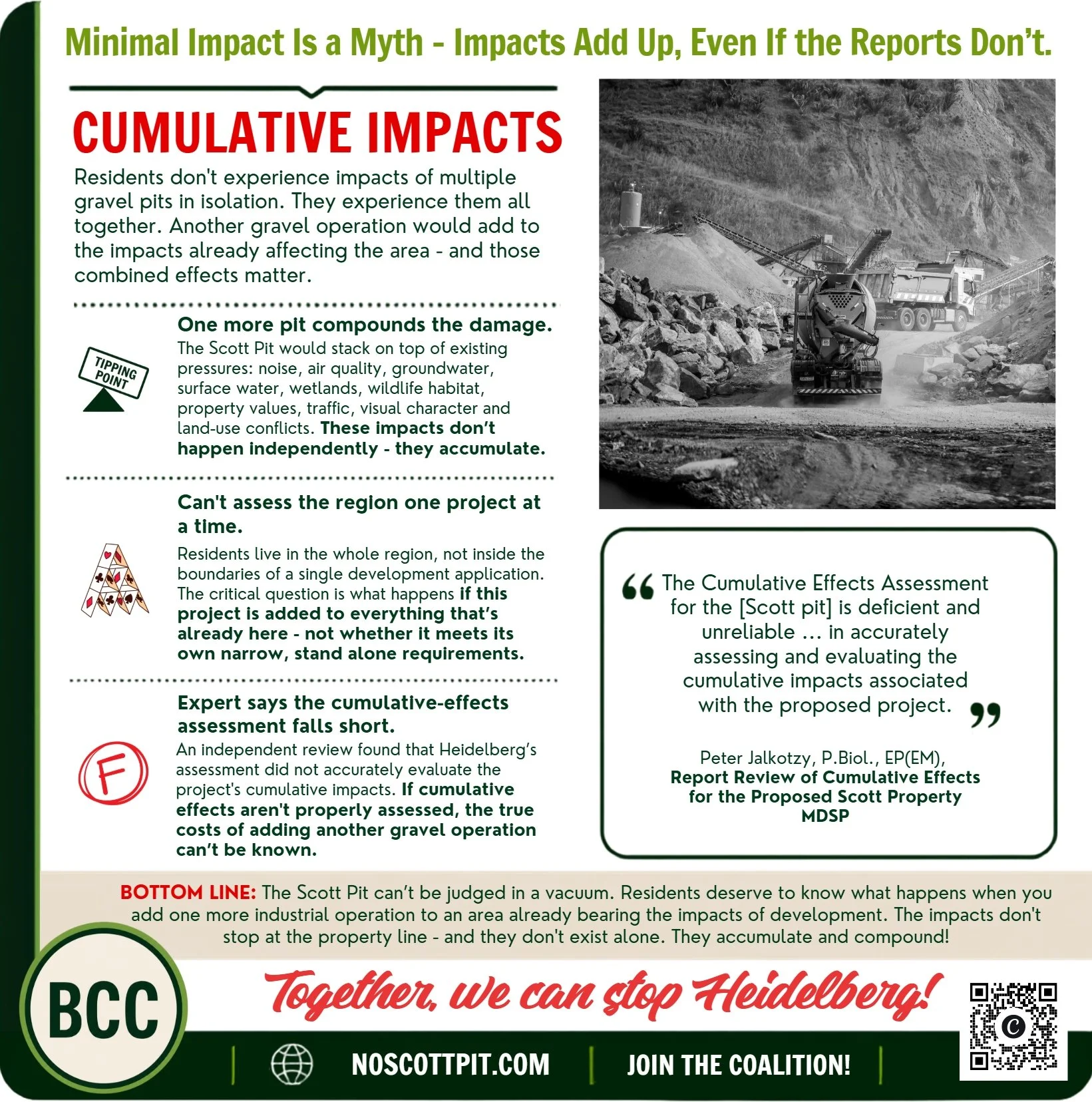
No one denies that gravel is essential for construction and infrastructure development, but extracting and processing it inevitably harms nearby residents and the environment. It affects health, safety, and overall quality of life.
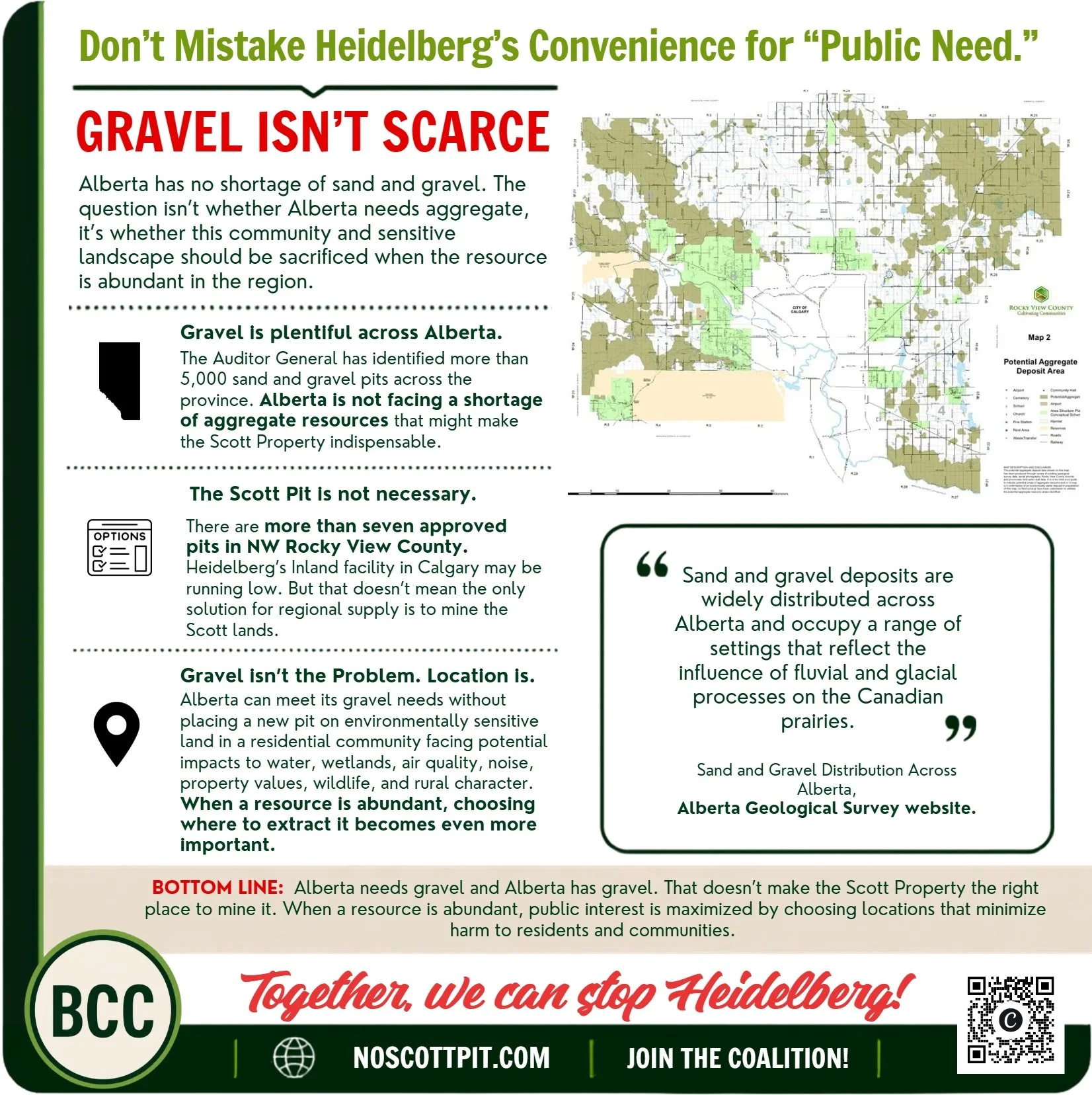
Aggregate is abundant throughout Calgary, Rocky View County and southern Alberta. Outside of boosting Heidelberg’s profits, there is no demonstrated need for the Scott Pit. Putting a massive industrial operation in the middle of a residential area and environmentally sensitive landscape would maximize harm where it is least appropriate — and permanently alter Bearspaw’s character.
The geology hasn’t changed, but the community has. Since 2021, Bearspaw and northwest Calgary have grown, meaning more residents, more homes, and more people directly exposed to the project’s impacts. What was a significant concern in 2021 is an even greater concern today: more families would face dust and emissions, and more population growth means more traffic, more heavy trucks and more disruption on already busy roads. The project has not become less impactful over time — the number of people who will bear those impacts has only increased.
Risks of permanent, irreparable damage from the Scott Pit project include:
-
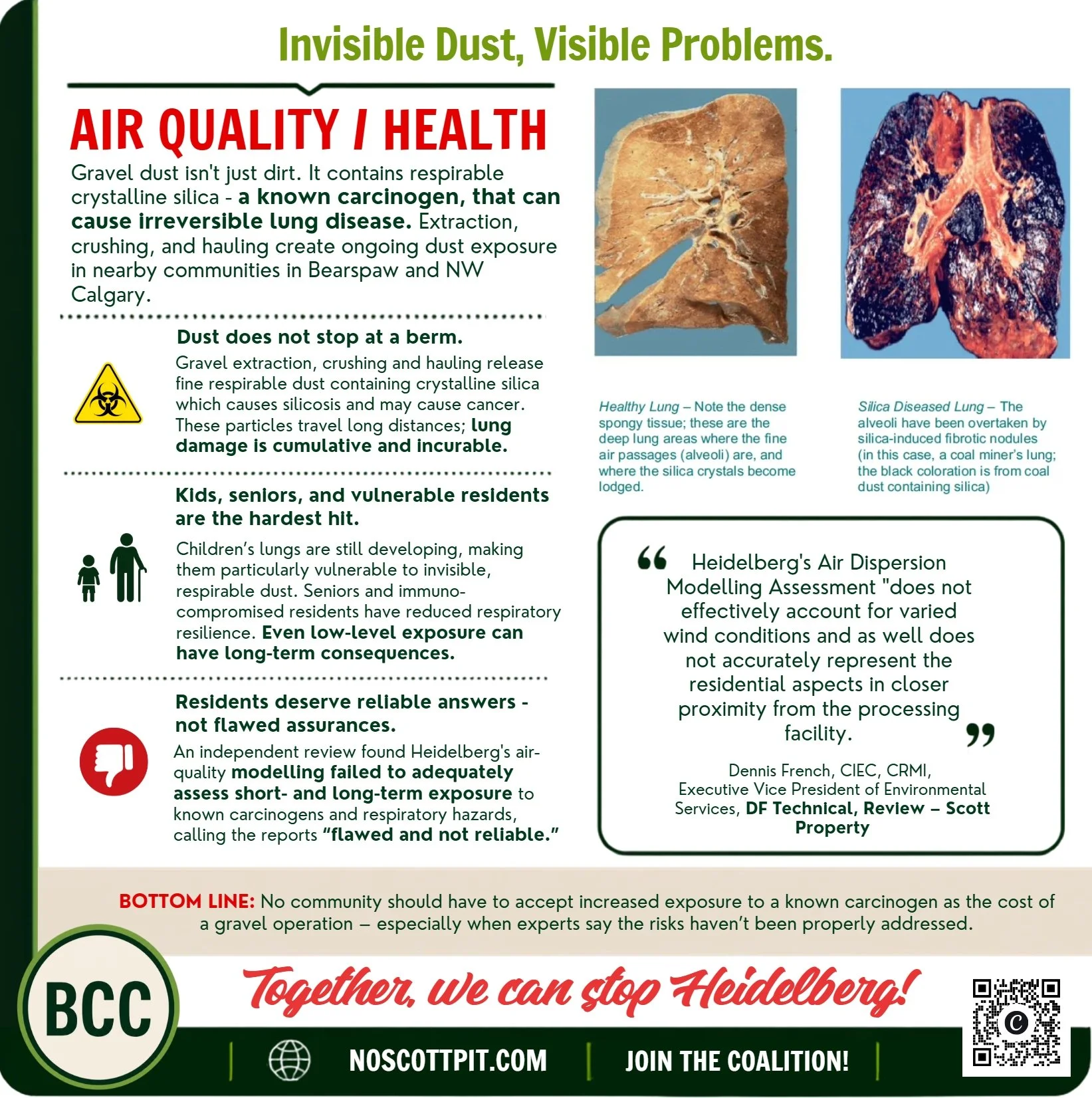
Gravel dust presents a real and foreseeable risk to human health, as it contains crystalline silica, a known carcinogen. Silica and other dusts are linked to kidney disease and cause Chronic Obstructive Pulmonary Disease (COPD). COPD includes chronic bronchitis, emphysema, bronchiectasis, and chronic airway obstruction.
-
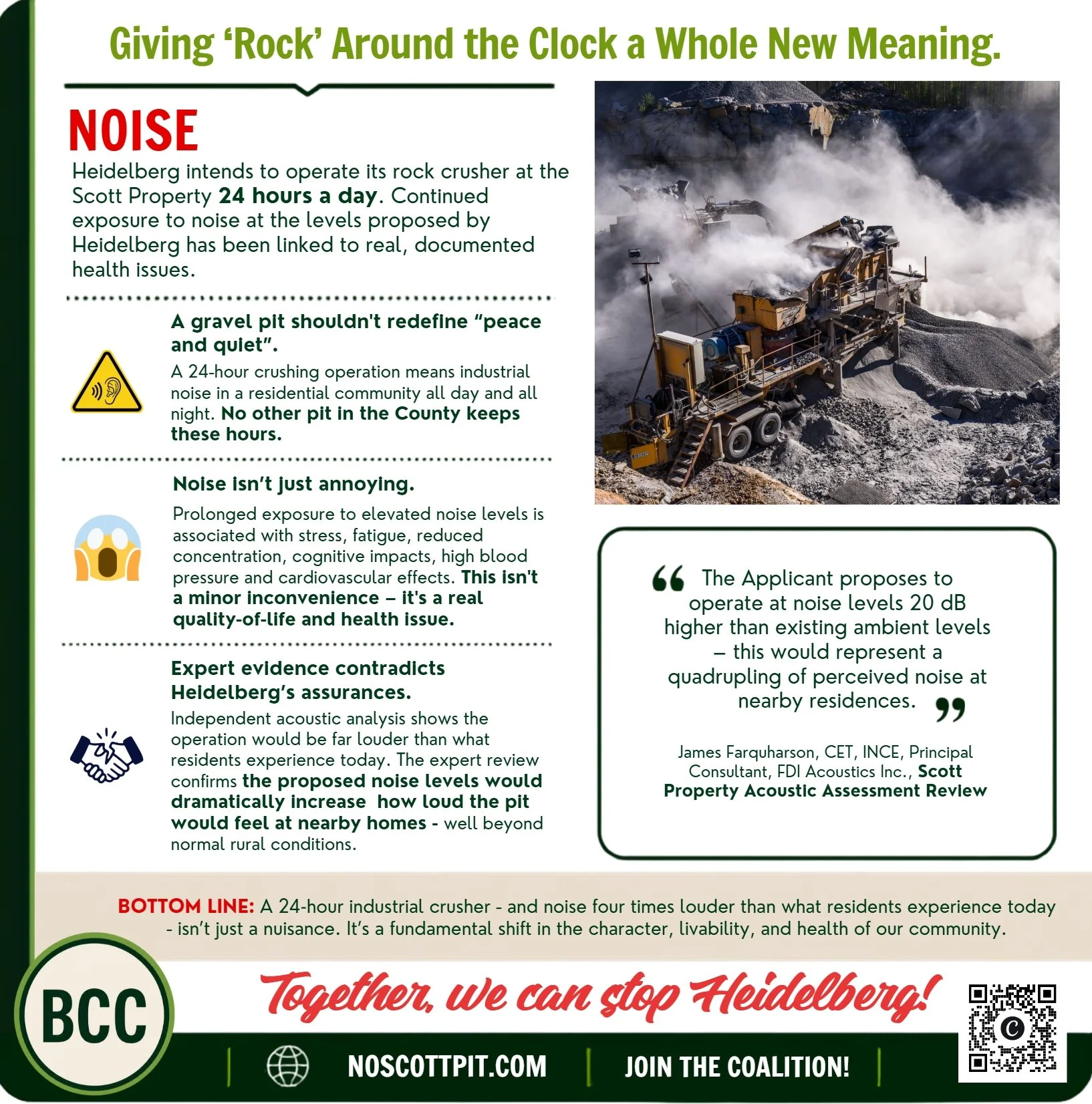
Noise will be at levels dangerous to residents closest to the proposed pit and will have long term impacts on the health of those over a broad area. This will fundamentally alter the rural residential character of adjacent lands. Experts have estimated the Scott Pit will operate at perceived noise levels 4x higher than ambient levels.
-
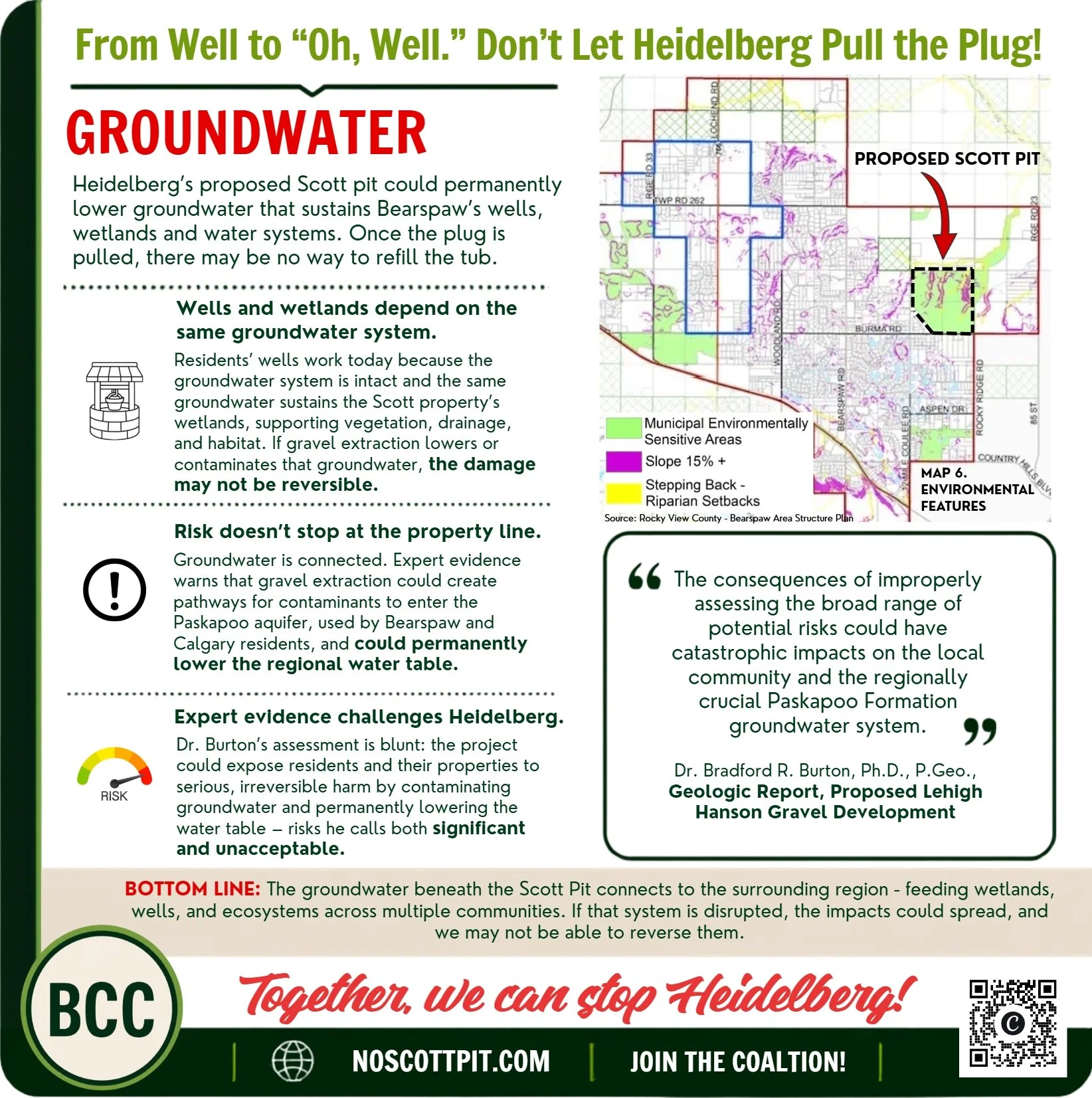
Because of significant fractures in the bedrock, gravel extraction presents significant risks of contamination for domestic well water.
-
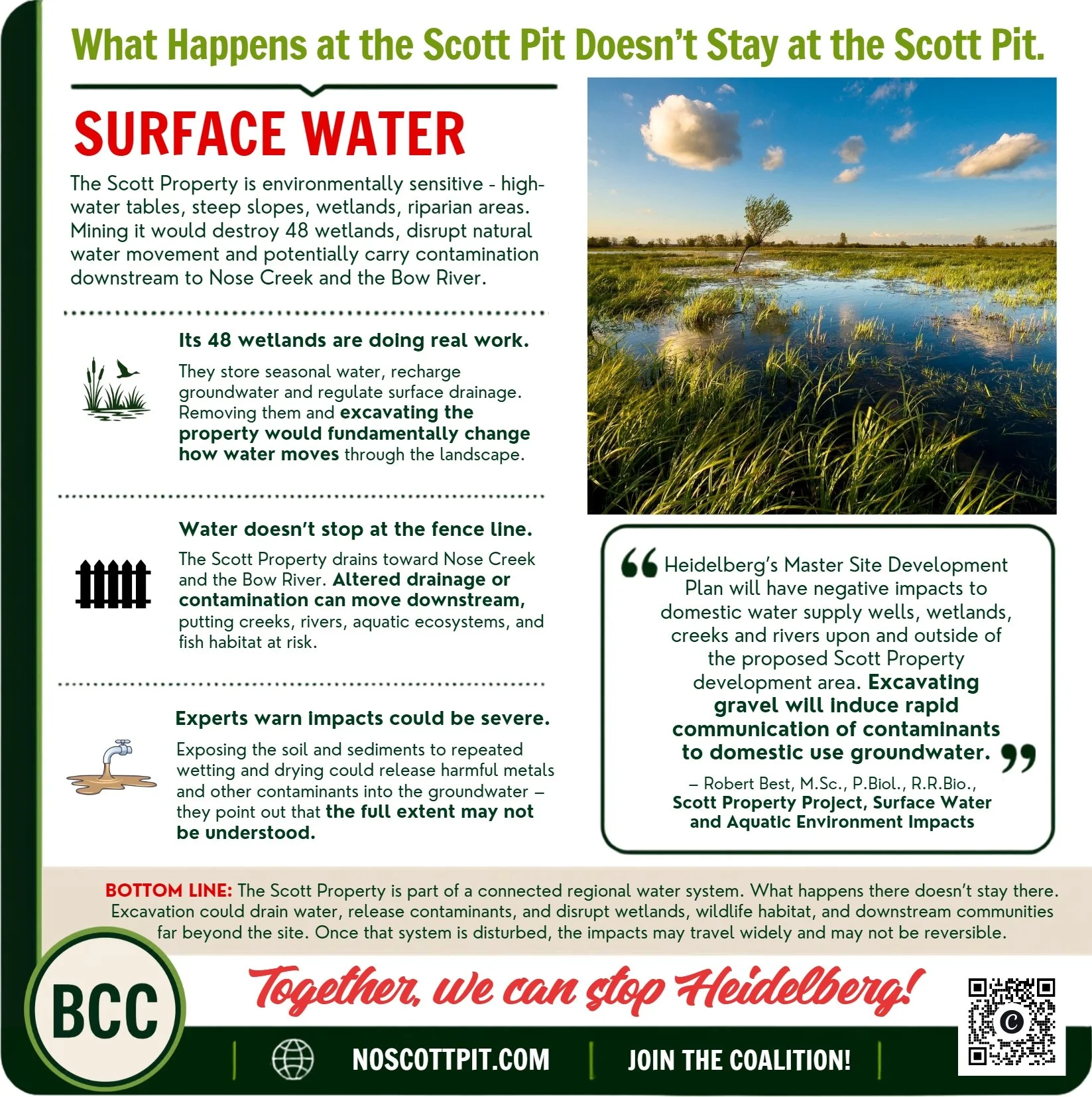
Dewatering of wetlands over a large areas is possible. Surface water is likely to be irreversibly harmed by the proposed pit, which will disrupt established drainage patterns and risk contaminating Nose Creek, and ultimately the Bow River.
-
Reclamation of the site to equivalent quality land use will not be possible. The project will remove millions of tonnes of rock, leaving a pit that will require perpetual water management to be funded by the County and its ratepayers.
-
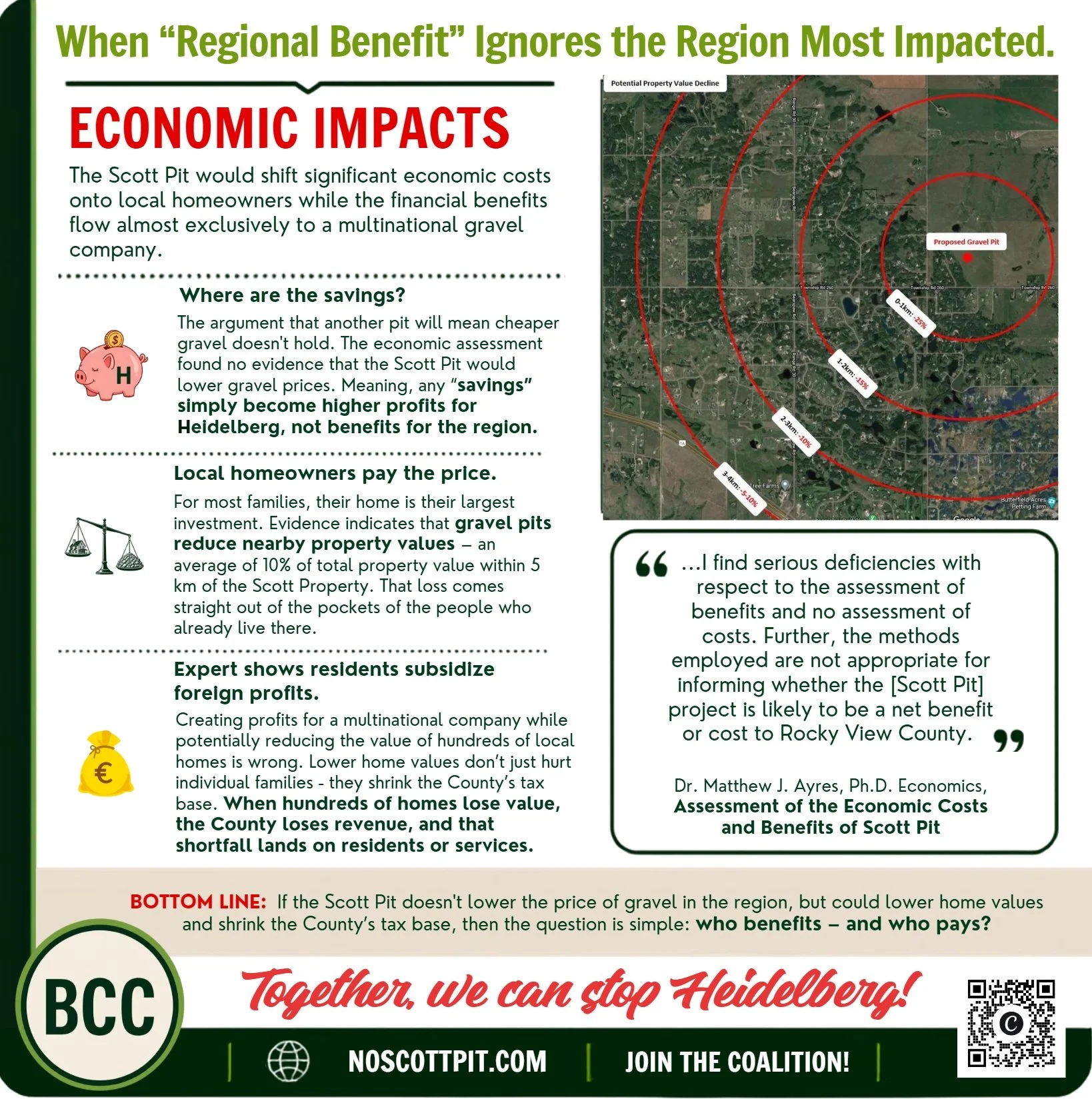
Experts estimate that the Scott Pit project would result in a $163 million reduction in surrounding property values and associated reduction in residential property tax revenue to the County.
Residents within 5km of the pit site can expect an impact in property value, with those located closest to the site experiencing declines of 25% or more.